
UCNMPA Class II · Non-blood contact
Youtu™ UC Series
Hydrophilic coating for non-blood-contact devices
In short
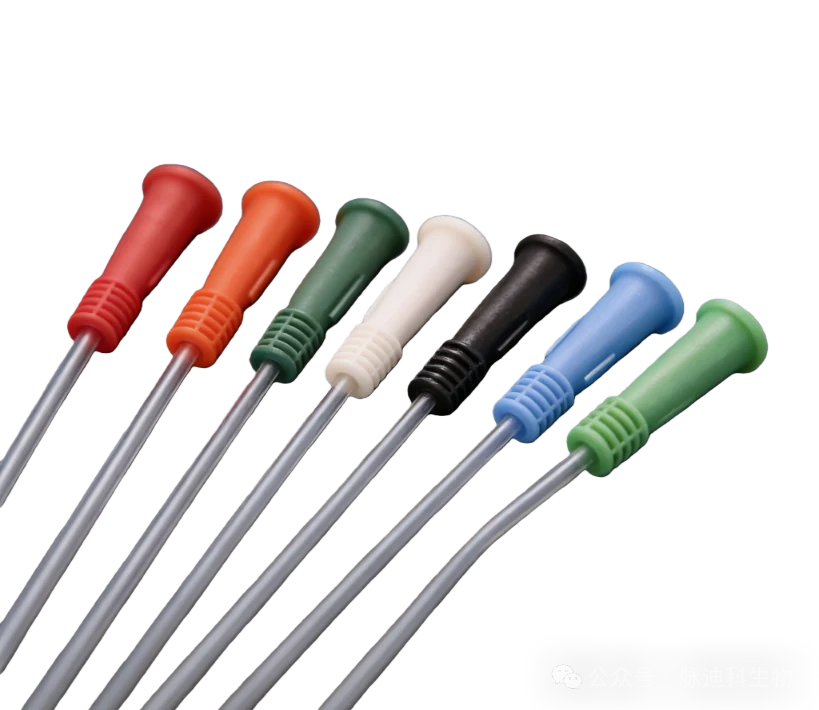
Youtu™ UC is a UV-cured hydrophilic coating for polymer substrates in non-blood-contact Class II devices. It retains lubricity for longer after wetting, which suits clinical procedures that need a wider working window, and is typically used in gastrointestinal, urological and surgical devices.
Formulation & Process
- Series code
- UC
- Form
- Liquid, ready to use
- Cure
- UV-cured (intensity ≥30 mW/cm²)
- Structure
- Single-layer or dual-layer
- Shelf life
- 3 years, room temperature, protected from light
- Substrates
- Polymer substrates
Published Performance Data
| Property | Value |
|---|---|
| Lubricity retention | 8–12 minutes[1] |
| Surface drying | Long surface-dry time, wide working window[2] |
- [1] Company-published figure, referring to the period during which the wetted coating maintains effective lubricity. Test method and environmental conditions (temperature, humidity, counterface medium, pass criteria) are to be specified. Data from different laboratories is not directly comparable.
- [2] Qualitative description. It describes the same behaviour as lubricity retention from a different angle and is not an independent quantitative metric.
Substrates
- TPU
- PA (nylon)
- PVC
Typical Applications
- Gastrointestinal intervention
- Urology
- Surgery
Design Intent
- Longer lubricity retention and a longer surface-dry time, giving a wide working window
Common Questions
- What is the difference between Youtu™ UC and Changtu™ CV?
- The difference is the regulatory class and the performance priority. Changtu™ CV targets blood-contacting Class III devices, where low particulate release and coating durability drive the design. Youtu™ UC targets non-blood-contact Class II devices, where longer lubricity retention and a wider working window matter more. Both are UV-cured and available in single- or dual-layer structures.
- How should the 8–12 minute lubricity retention be interpreted?
- It is a company-published figure describing the period during which the wetted coating remains effectively lubricious. Retention depends on test method, ambient temperature and humidity, counterface medium and pass criteria, so results from different laboratories are not directly comparable. If this metric is decisive for your clinical working window, base the decision on testing in your actual use scenario.
- Which biological evaluations apply to non-blood-contact devices?
- The test battery depends on the nature and duration of contact. Non-blood-contact devices generally do not require blood interaction testing, but still need the basic ISO 10993 series endpoints such as cytotoxicity, sensitisation and irritation. The final list should be determined by the device registration applicant based on intended use.
- Which series suits urinary catheters?
- Urinary catheters are generally non-blood-contact urological devices, so Youtu™ UC is usually appropriate. If the product has specific particulate release or lubricity retention requirements, send us the device construction and target performance and we will recommend the series and process.
- Can I request a sample for evaluation?
- Yes. It helps to provide sample devices or substrate grades to be coated, target lubricity retention or coefficient of friction range, and your current cure process conditions. We match the product grade and process recommendation against those inputs.
Technical Directions
Functional directions that can be layered onto the series.
Request a sample of Youtu™ UC Series
Send the substrate grade, device construction and target performance. We will confirm the grade and process route and arrange samples where appropriate.
Contact Mr. Shi